
Why South Korea has garnered significant attention in the global clinical trial landscape?
Why South Korea has grown as the hottest spot in the global clinical trial landscape?
(3 reasons to pay attention)
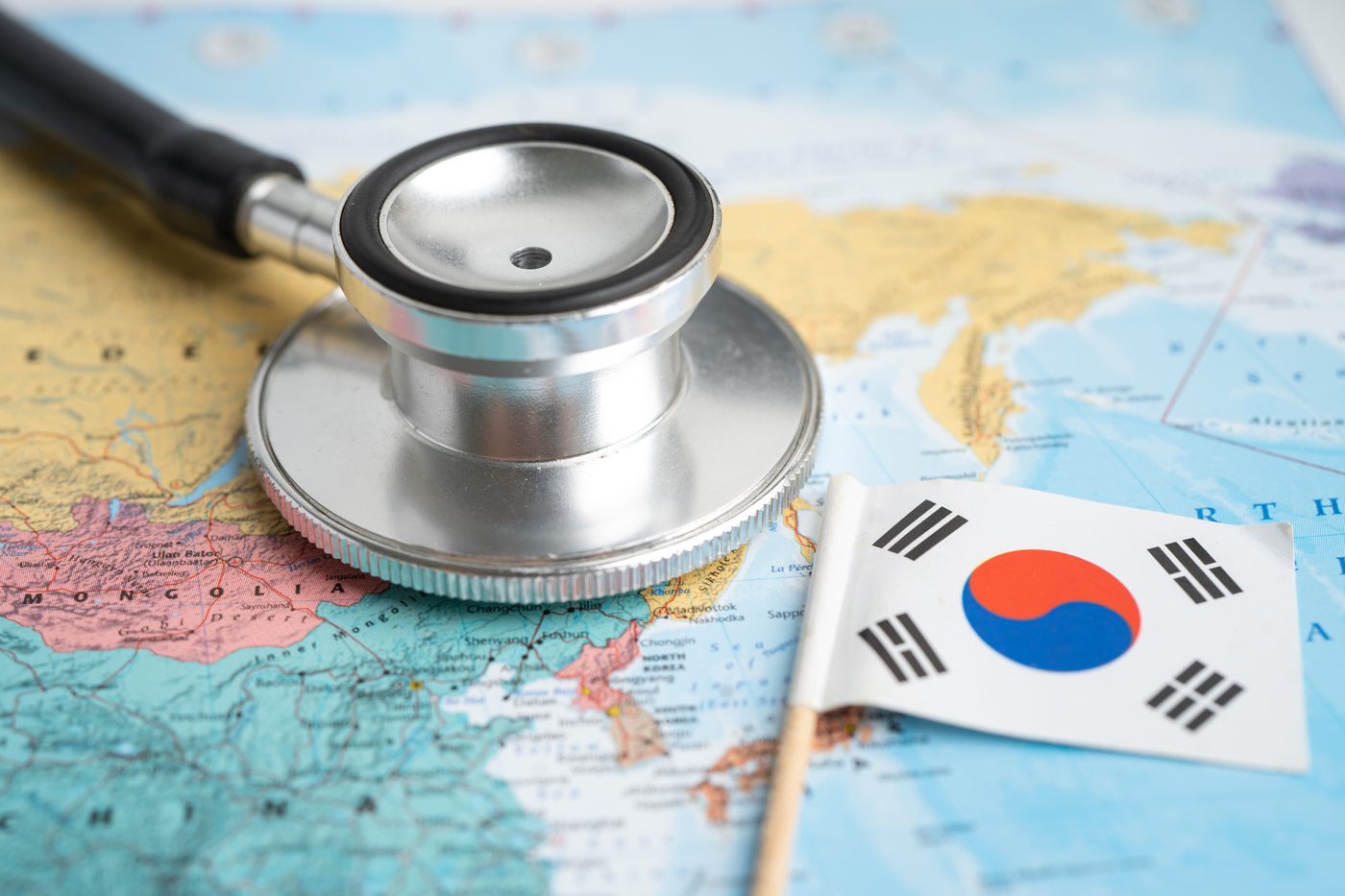
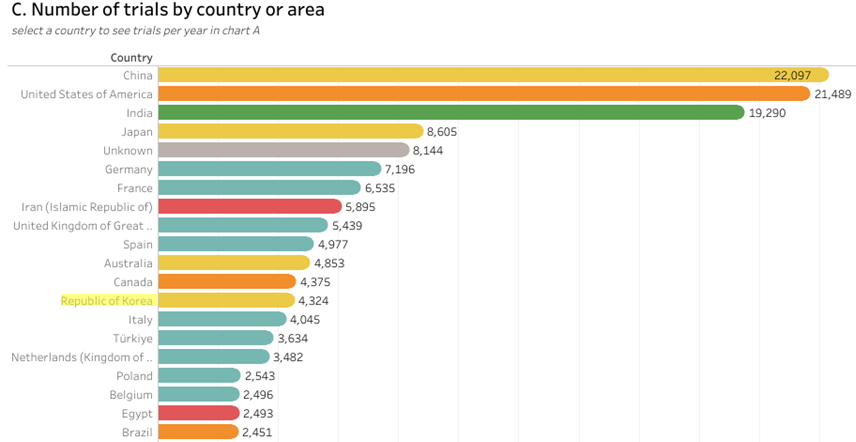
For several years, Korea has earned significant attention in the global clinical trial field. For example, South Korea was placed 13th in the total number of clinical trials between 2021~2022. If you recall that Korea didn't have any decent medical facilities a few decades ago, this is a truly remarkable development. According to the KHISS, the pharmaceutical market size of South Korea is around 11th and the quality of the cliniacl trial system has been improved from both qualitative and quantitative perspectives.
What made this amazing growth? There are 3 factors that you should pay attention.
Demographic Factor : A readily accessible patient population
Characteristics of the patient population are a competitive advantage of South Korea. For the population density, more than 20% of the population is concentrated in Seoul and regions around the capital. Therefore, Seoul took 1st rank in clinical trials per city statistics. Additionally, South Korea is experiencing a whirlwind aging population. Currently, 17.5% of the south korean population is over 65 years old and this rate will increase rapidly so the experts predict that over 20% of the population will consist of elderly people only 3 years later. With a long life expectancy, this factor makes South Korea the suitable site for conducting clinical trials of indications which are common in Western countries.
Owing to high income, the finest health institutions, and a well-organized public health insurance system, the disease pattern of South Korea is very similar to those in Western Countries. South Korean patients have equivalent unmet medical needs such as cancer, cardiovascular disease, and cerebrovascular disease. It makes South Korea a more attractive option for the global pharmaceutical companies.
Systematic factor : Competitive Medical System
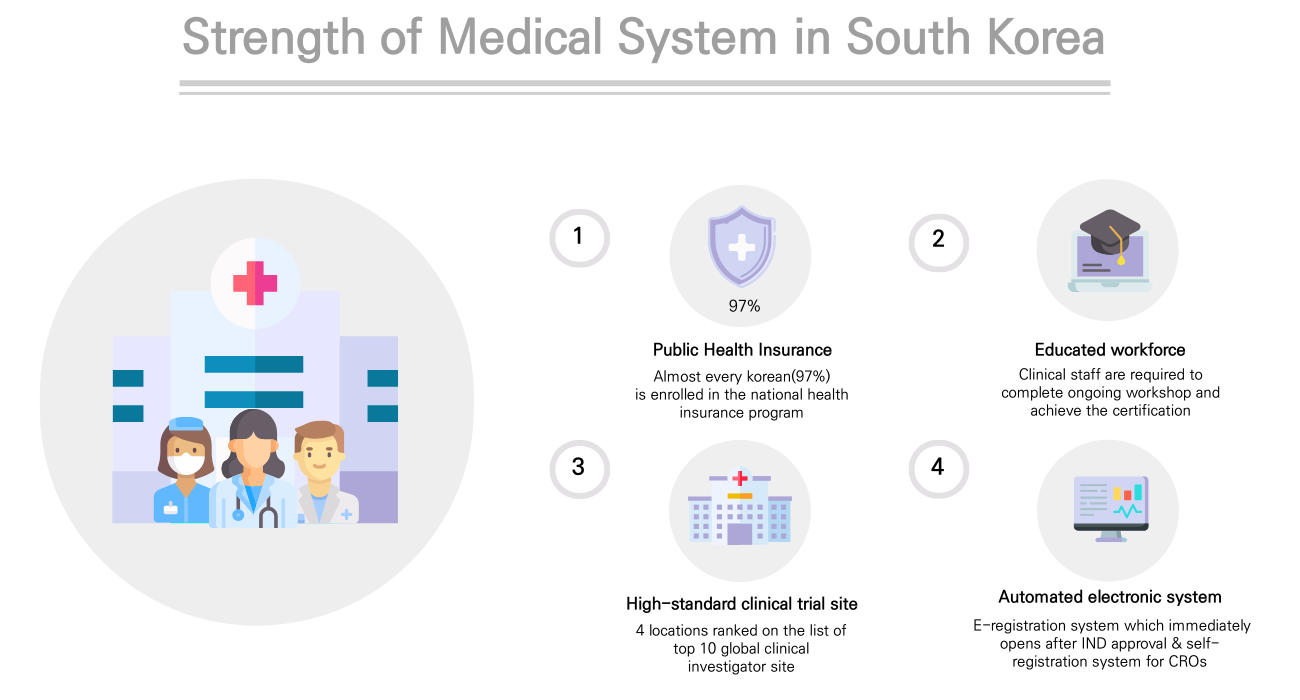
To conduct clinical trials flawlessly, designating the clinical trial site is important. In South Korea, you can proceed with this process more conveniently and wisely.
1. Public Health Insurance System :
Almost every Korean is enrolled in the national health insurance program. What it means is that it ensures that a large portion of the population has access to healthcare services. This can contribute to a more diverse and representative patient population in clinical trials, as a broader range of individuals may have access to the necessary healthcare and may be willing to participate.
2. Educated Workforce :
The importance of education is emphasized, particularly in the clinical trial sector where ongoing workshops and certification programs are held throughout the year. The educated workforce can proceed with the clinical trial more effectively.
3. High-standard Clinical trial site :
4 sites in South Korea(Seoul National University, Asan Medical Center, Samsung Medical Center, and Yonsei University Severance) are placed in the list of the top 10 global clinical investigator sites. Those four medical institutions have performed 2,258 studies in the past five years. When you decide to conduct global clinical trials in South Korea, you will be satisfied with the abundant experience and fast registration rate.
4. Automated electronic system :
Medical institutions in South Korea have adopted modern medical software actively and extensively. Most hospitals use electronic medical records (EMRs) and picture-archiving-and-communication systems (PACS). Those EMRs are used for clinical trial feasibility assessments too. Additionally, major clinical research organizations(CROs) have proprietary developed self-registration programs and share them with sites when they conduct clinical trials. Those electronic system has raised the efficacy and consistent quality of clinical trials in South Korea.
Policy factor : Deregulation & Government Support

To reduce the burden of carrying out clinical trials in South Korea, the government has simplified the regulatory process and strengthened government support.
For example, CTA process could proceed faster, so it could be approved within 30 days from the submission. After this step, the Ministry of Food and Drug Safety (MFDS) approves the trial or issues a request for additional information. The procedure allows sponsors to reduce the time needed to get approval by submitting trial requests to IRBs (institutional review boards), ethics committees, and the MFDS simultaneously. Consequently, it prevents the delay of the preparation period of study.
To strengthen government support, the government started three programs: Regional Clinical Trials Center (RCTC), Global Center of Excellence in Clinical Trials (GCE), and the Korea National Enterprise for Clinical Trials (KoNECT). It expands the accessibility of clinical trial information to foreign researchers.
Why Huscience could be the best partner for the company which decided to start the clinical trial in South Korea
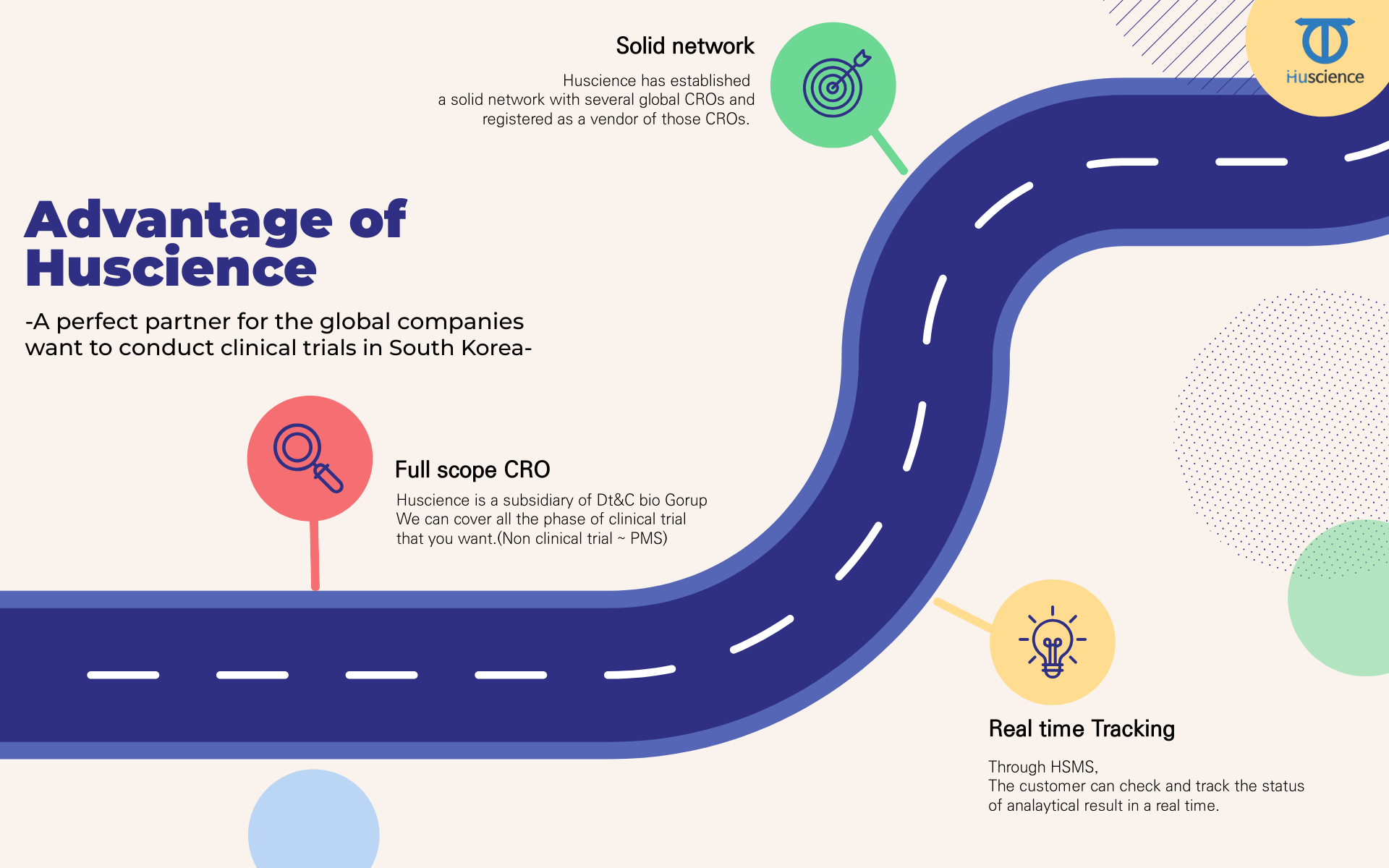
When you start the clinical trial in South Korea, it's really important to designate appropriate partners. Huscience can be a perfect partner due to the below reasons.
1)Full scope CRO
: Huscience is a subsidiary of Dt&C Bio Group, and Dt&C Bio group provides a full-scope CRO service. Therefore, we can cover all phases of clinical trials that customers would like to proceed with by connecting other subsidiaries of our group
2)Real-time Tracking
: Huscience has developed special software for communicating with sponsors, sites, and Huscience. Through this software, you can track the status of clinical trials in detail, 24/7! All of our customers can use this program through simple translation.
3)Solid network
: For the global study, Huscience has participated in CAP accreditation and ISO 17025. Additionally, we have established a solid network with global CROs via vendor assessment, for customer convenience.
If you are ready to use Husicence’s Central Lab service, Start the Conversation.