
South Korea Regulatory Approval System for IVD(In-vitro diagnosis)
South Korea Regulatory Approval System for IVD
South Korea follows a regulatory approval system for In Vitro Diagnostic (IVD) products to ensure the safety and efficacy of these medical devices in the market. The regulatory framework is primarily overseen by the Ministry of Food and Drug Safety (MFDS), formerly known as the Korea Food and Drug Administration (KFDA). Today, We will look through the definition of IVD, a classification of IVD, and the approval system.
What is the IVD(In vitro diagnotiscs)?
IVD stands for "In Vitro Diagnostic." In Vitro Diagnostic products are medical devices that are intended for the examination of specimens derived from the human body, such as blood or tissue, to provide information for diagnosing, preventing, or monitoring diseases. These tests are performed outside the body, in contrast to in vivo diagnostic tests, which are conducted inside the body. IVD products play a crucial role in healthcare by providing essential information to clinicians for disease diagnosis, prognosis, and treatment monitoring. IVD products are subject to regulatory approval to ensure their safety, efficacy, and accuracy. Regulatory bodies in different countries establish guidelines and requirements for the development, manufacturing, and marketing of IVD devices. Manufacturers must adhere to these regulations to bring their products to market.
The classification of IVD
As of the last available information, South Korea follows a classification system for medical devices that includes IVDs. The classification is based on factors such as the intended use, potential risk to patients, and the technology involved. The MFDS classification system generally categorizes medical devices into four classes:
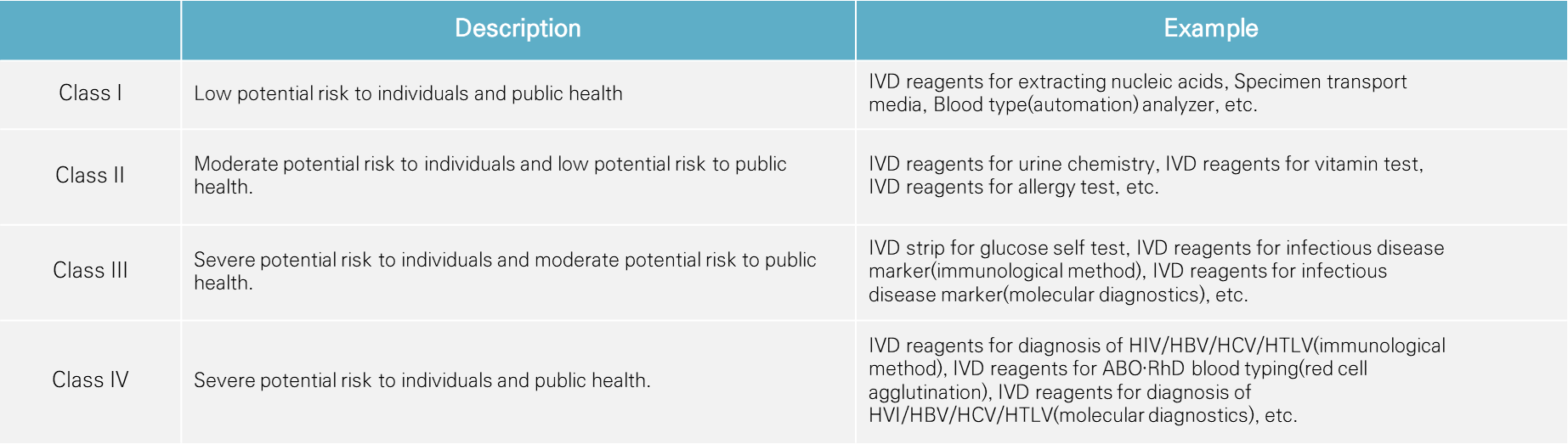
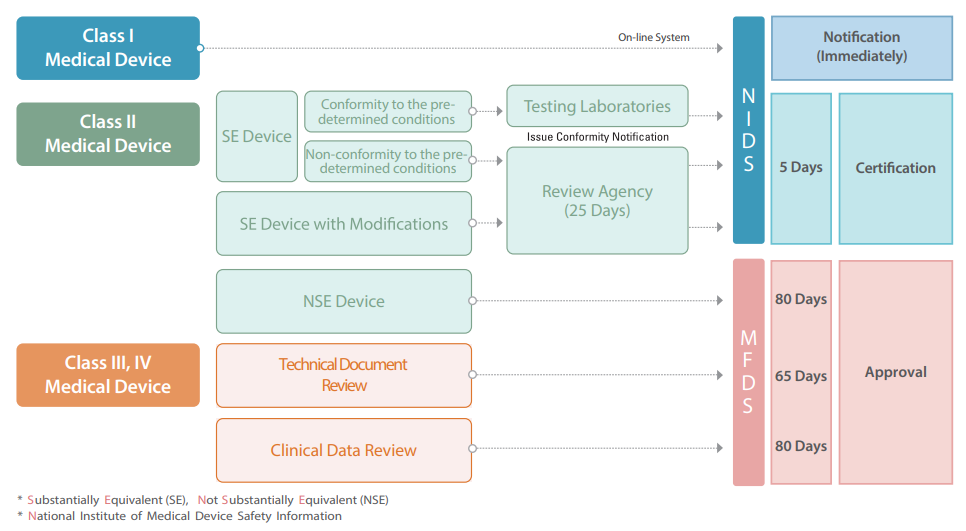
Based on risk classification of medical devices, each classes of devices have different pathways for the authorization. For an easy access and better compliance of regulations, having a consulation with MFDS is the most important. For the devices on class 3 or 4, it's important to understand whether your devices are the target of technical document review or the clinical trial data.
IVD Approval System-CTA(IDE)
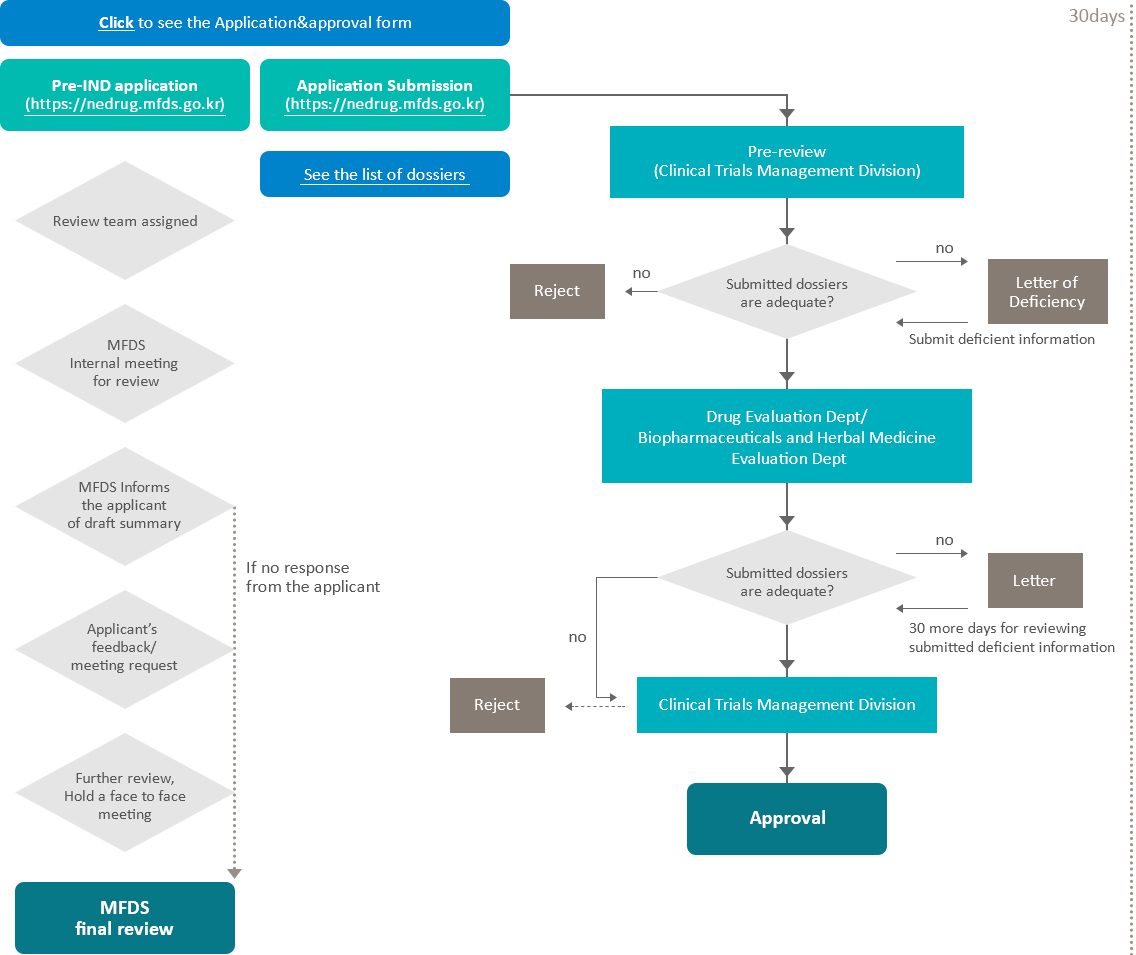
MFDS has 30 business days to review and to make a decision on an CTA (IND/IDE application). The agency also takes the same
amount of time to review an application requesting to amend a previously approved protocol. Such timeframe is required by law, and MFDS must therefore abide by it. MFDS reviews and approves different studies of the CTA (IND/IDE) in parallel or sequence without affecting a study's 30-day review time. In general, however, sponsors estimates 2-3 months for the whole process, starting from the submission of the first version of applications to the final approval from MFDS. This timeframe includes one month to respond to MFDS's questions or request for additional submission. The MFDS clock stops counting its review time the number of days between the date of MFDS letter of deficiency and the date of company submission filling out such request.
Expanding market opportunity via MFDS(K-FDA)

Achieving regulatory approval in South Korea can bring a lot of chances for foreign manufacturers of medical devices, including In Vitro Diagnostic (IVD) products due to the below reasons.
1.Regulatory approval in South Korea can serve as a valuable reference and endorsement for other international markets. Many countries and regions recognize approvals from reputable regulatory authorities, and having approval in one market can facilitate the approval process in others.
2.Adhering to South Korea's regulatory requirements demonstrates a foreign manufacturer's commitment to compliance with local laws and regulations. This is essential for building a positive relationship with regulatory authorities and ensuring legal market presence.
Due to above reasons, a lot of foregin companies are inereste in achieving the approval in South Korea and we can help the companies when they need a analytical service.
If you are interested in our suggestion, Let's continue the conversation.